
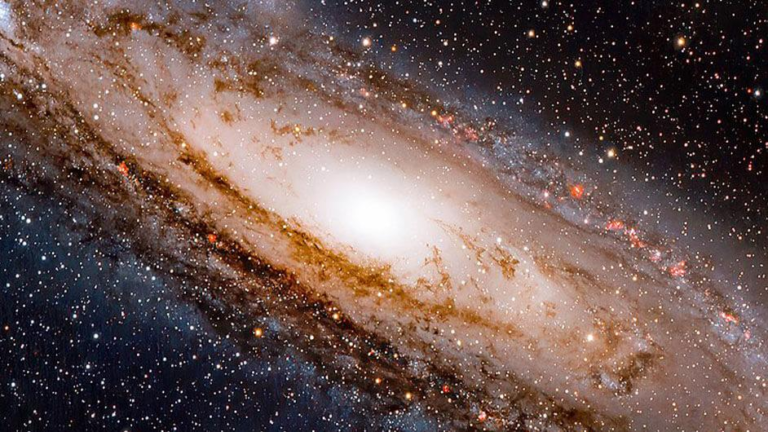
Cosmology is one of those words that sounds enormous, like something too big to touch, too mysterious to fully understand. And in a way, it is. Cosmology is the study of the universe as a whole: its beginning, its structure, its evolution, its fate.
It’s the science of everything. The story of space and time. The attempt to understand how all of this, all of us, came to be.
But cosmology is also something much more personal. The more I learn about the universe, the more I feel like it’s teaching me something about myself.
The Universe Begins With Questions
Cosmology asks the biggest questions humans have ever wondered:
Where did the universe come from?
What existed before the beginning?
Why is space expanding?
What is time, really?
What is the universe made of?
How will it all end?
These aren’t the kinds of questions that fit neatly into equations or diagrams. They’re questions that spill into philosophy, poetry, imagination, and meaning.
Cosmology reminds us that it’s okay not to know. That wondering is its own kind of understanding. That asking big questions doesn’t make us small; it makes us human.
The Universe Is Mostly Invisible
One of the wildest truths in cosmology is this:
We only understand about 5% of the universe!
Five percent.
The remaining 95% is:
dark matter: invisible, silent, holding galaxies together
dark energy: a mysterious force causing the universe to expand faster and faster
We live inside a cosmic ocean we barely understand.
It means the universe still has secrets worth exploring. It means curiosity will always matter. It means discovery isn’t something we’re running out of; it’s something we’re just beginning.
Cosmic Time Is Wildly Different From Human Time
Sometimes, cosmology makes you feel tiny.
The universe is 13.8 billion years old. Earth is 4.5 billion. Modern humans have been around for less than a blink in cosmic time.
But instead of making me feel insignificant, cosmic time makes me feel grateful. We get to exist in this tiny, shining moment when life is possible, when stars illuminate the sky, when the universe is transparent enough for us to see its beginning.
We are alive at the perfect time to look up.
The Cosmic Web Connects Everything
Zoom out far enough, and galaxies arrange themselves into filaments; long threads of matter forming a vast, interconnected web stretching across the universe.
Between the threads are enormous voids: quiet, dark expanses where almost nothing exists.
This structure is one of my favorite facts in cosmology, because it mirrors something deeply human:
We all live inside invisible webs of connection: friendship, memory, love, shared curiosity, shared dreams.
The universe itself is a reminder that connection isn’t an accident. It’s woven into the fabric of reality.
The Universe Had a Beginning and Still Has a Future
The Big Bang wasn’t an explosion; it was the birth of space and time themselves. Everything began from a single, unimaginably dense point.
And we are still inside that expansion. Still riding the shockwave of creation. Still part of a universe in motion.
Thinking about the beginning always leads to thinking about the end:
Will the universe expand forever?
Will it cool into silence?
Will gravity pull everything back together?
Will something new begin again?
Cosmology gives us models, theories, possibilities, but not final answers.
There’s something beautiful about living in a universe that keeps its endings open.
Cosmology Makes Room for Wonder
Every time I study cosmology, I’m reminded that the universe is not designed for clarity. It’s designed for mystery. And instead of making me feel lost, that mystery makes me feel grounded.
Wonder is not a distraction. It’s a form of understanding. A way of engaging with the universe that’s emotional as well as scientific.
Maybe that’s why cosmology feels so meaningful to me. It connects the biggest scales with the smallest feelings: awe, curiosity, gratitude, love.
It reminds us that we exist between stars and atoms, between vastness and intimacy. We are part of something ancient, but we get to experience it in our own brief, brilliant moment.
A Final Thought
Cosmology isn’t just about the universe. It’s about our relationship with it.
It helps us recognize our smallness without losing our significance. It teaches us that the unknown is not something to fear, but something to embrace. It invites us to feel connected, to each other, to the stars, and to the story we’re all part of.
We are tiny. We are cosmic. We are temporary. We are made of stardust. And somehow, we get to be here, right now, asking questions about the beginning of everything.
That’s the wonder of cosmology. And that’s why it matters.
